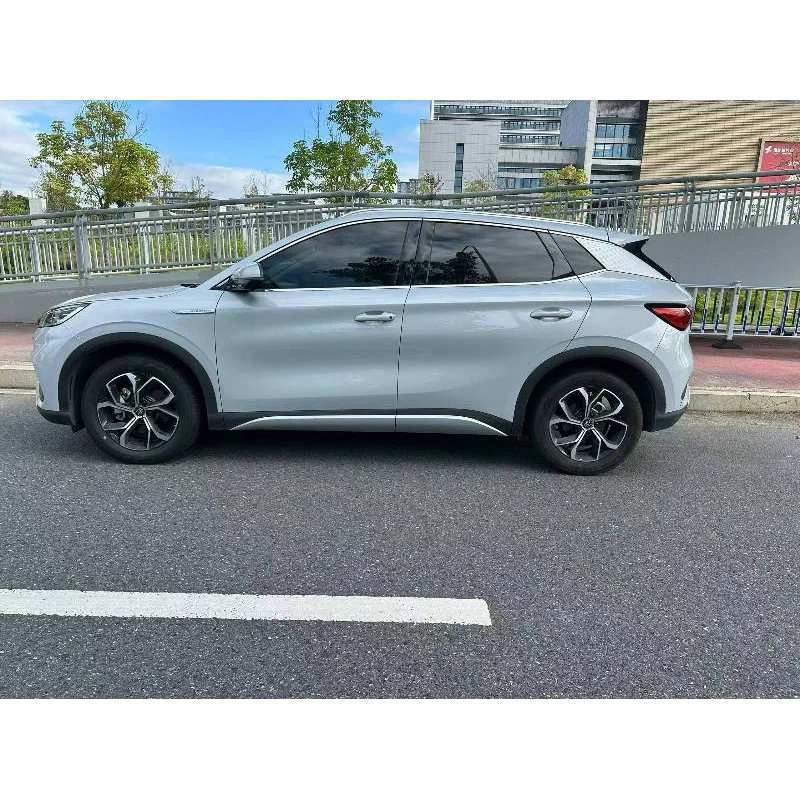
The used BYD Atto 3 can be suitable for export to African markets, provided the destination has compatible charging infrastructure, an acceptable left-hand-drive vehicle policy, and access to EV servicing. Its electric powertrain removes tailpipe emissions and routine engine maintenance, but battery condition, charging options and replacement-part support require closer checks than they would for a conventional petrol SUV.
Powertrain, range and export suitability
The BYD Atto 3 is a fully electric compact SUV using BYD’s Blade Battery technology and a front-mounted electric motor. It is front-wheel drive rather than four-wheel drive. This distinction matters for buyers operating on rough roads or regularly travelling outside urban areas. The vehicle has useful everyday ground clearance, but it is not designed as a dedicated off-road SUV.
Range depends on the battery version, model year, driving conditions and previous battery use. Published figures should not be treated as a reliable estimate of operating distance in Ghana, Nigeria, Kenya, Uganda or Tanzania. High temperatures, air-conditioning use, road gradients, vehicle load and driving speed can all affect energy consumption. Buyers should request the exact battery capacity and original rated range for the particular unit, then compare these figures with its measured battery performance. The Atto 3 produces no tailpipe emissions, although electricity generation and battery production still have environmental impacts. It does not have a conventional petrol-engine emission standard in the same sense as the Chery Tiggo 7 Plus or Haval H6. Import authorities may nevertheless apply separate requirements to electric vehicles.
Drive side is another important consideration. Most vehicles sourced from China’s domestic market are left-hand drive. Buyers in Ghana, Nigeria, Kenya, Uganda and Tanzania should confirm whether a particular LHD vehicle can be registered and operated under current local rules before arranging shipment. A vehicle’s technical suitability does not override national registration requirements.
Battery condition, grading and practical checks
Used Atto 3 units should be assessed by condition rather than registration year or odometer reading alone. A typical export grading process considers exterior panels, paintwork, interior wear, tyres, suspension, electrical equipment and mechanical condition. Grade descriptions vary between exporters, so buyers should request a written grading standard and supporting photographs.
Battery assessment deserves separate attention. The Blade Battery’s reputation does not establish the health of an individual used vehicle. A buyer should request a battery state-of-health report, diagnostic fault-code scan and available charging history. The inspection should also check for battery casing damage, warning messages, unusual temperature readings and evidence of previous repairs. Charging performance should be tested where equipment is available.

Other checks include:
- Verify the VIN against registration and export documents.
- Test the motor, regenerative braking and driving modes.
- Inspect the charging port, cable compatibility and onboard charging functions.
- Check the air-conditioning system, infotainment, cameras and driver-assistance features.
- Examine tyres, suspension components and underbody protection.
- Review accident, repair and maintenance records where available.
A used car certified through an inspection process should have identifiable supporting documentation. The term alone does not establish a universal certification standard. Buyers should establish who performed the inspection, what was tested and whether the battery assessment is included.
The Atto 3 also needs a realistic after-sales plan. Parts availability for Chinese-brand EVs can differ significantly between markets. Buyers should check whether local workshops can diagnose BYD systems, obtain compatible replacement components and handle high-voltage battery work. The availability of general suspension and braking parts does not automatically mean specialist EV support is available.
Charging access and shipping considerations
Charging infrastructure is a practical purchasing factor in all five destination markets. Public charging availability varies by city and route, while private charging may require suitable electrical installation. Before ordering, buyers should confirm the vehicle’s charging connector, supported charging standards and compatibility with local charging equipment. A home or depot charging arrangement can make an Atto 3 more practical for regular urban use. Long-distance commercial operation requires more careful route planning.
The vehicle’s charging system and battery condition should be documented before export. Used EVs also require appropriate handling during transport. Battery condition, shipping declarations and carrier requirements must be checked before booking. Depending on vehicle dimensions, shipment arrangements and buyer preference, the Atto 3 can be transported by RoRo or secured inside a container. Container shipping provides additional protection from exposure during transit, while RoRo is a common option for operable vehicles.
China’s used vehicle export process requires the relevant export licensing, customs declaration and pre-shipment inspection. The commercial invoice, vehicle identification details and other export documents must be prepared for customs clearance. Import documentation and registration requirements are determined separately by the destination country. Ghanaian, Nigerian, Kenyan, Ugandan and Tanzanian buyers should confirm current vehicle-age restrictions, EV import procedures, applicable duties and registration conditions with the relevant authorities or a licensed customs agent.
Before payment, the buyer should receive the vehicle specification, inspection findings, battery report and agreed shipping terms. The contract should identify the vehicle by VIN and explain the payment schedule, inspection arrangements and responsibility for shipping costs. Shipping lead times depend on port schedules, customs processing and vessel availability. These details should be confirmed against the actual booking rather than treated as fixed estimates.
FAQ
Q: Is the used BYD Atto 3 suitable for Nigerian and Ghanaian roads?
A: It can suit urban and suburban use where charging and servicing are accessible. Buyers should assess road conditions, ground clearance, battery health and local EV support before purchase.
Q: What is the most important check when importing a used BYD Atto 3 from China?
A: Battery state of health is a priority, alongside accident history, VIN verification and charging-system diagnostics. Buyers should also confirm LHD registration eligibility and current EV import requirements before shipment.